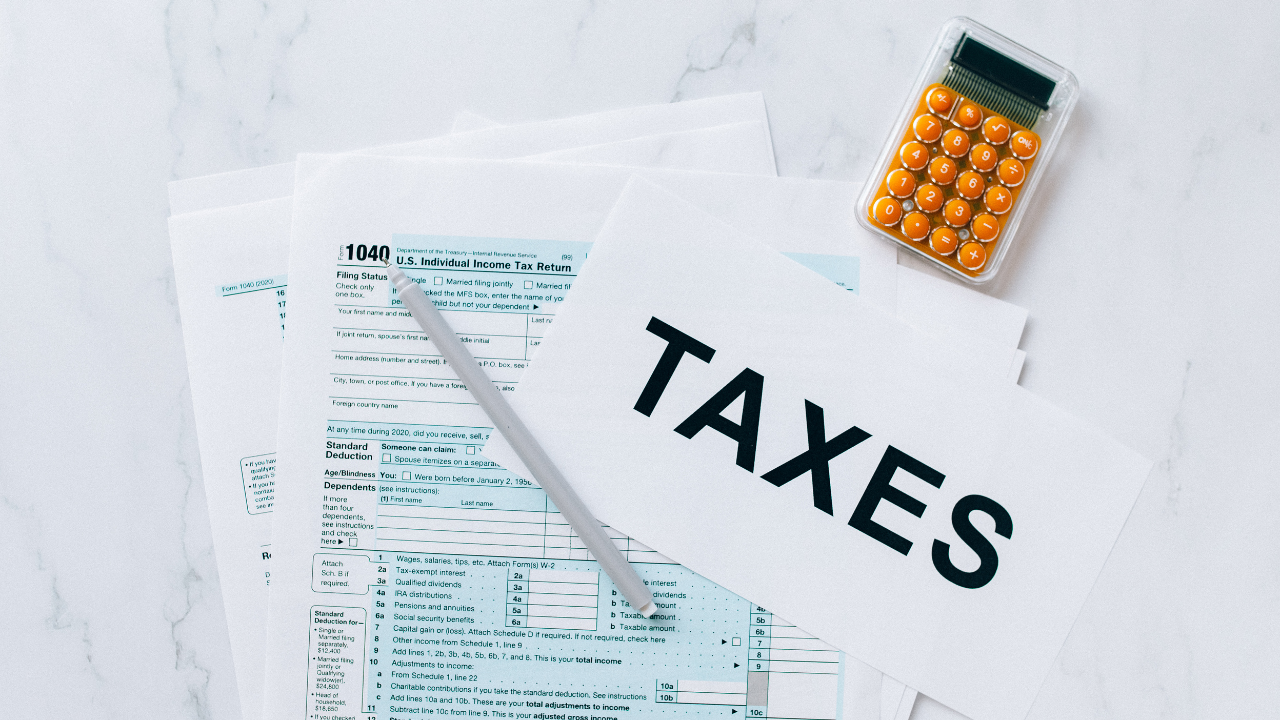
Summary: Most of us invest in a 401(k) or similar retirement plan. But should we be doing it? And if you have money in retirement accounts, is there ever any justification for liquidating them? In this post we cover the reasons Kenji and I are taking money out of our retirement accounts, what gave us the confidence to make this move, and how we plan on overcoming and/or avoiding ALL of the penalties for early withdrawal.
“Kenji and I are liquidating our retirement accounts.”
What!!?
I know what you are thinking. We get the same reaction from nearly anyone we tell. What we are doing is risky and reckless. It goes against everything you have been taught about saving for retirement.
So why would anyone liquidate their retirement accounts?
And is it as risky and reckless as everyone thinks?
The Cultural Norm
Since the advent of the 401(k) in the late 1970s, the dogma has been, “max out your retirement accounts so that you can live comfortably in your old age.”
This concept is so ingrained in our culture, that I bet if you thought about liquidating YOUR retirement account, you’d feel intense fear and anxiety.
One year ago, I felt that same way. My 401(k) was my insurance policy for the future.
Like our peers, Kenji and I dutifully maxed out our 401(k) retirement accounts year after year. We weathered market downturns and bull markets without changing the amount we contributed. I fully held the belief that socking away money in the stock market ensured that I would be secure in my retirement.
So what changed?
Kenji has been down on retirement accounts for a long time – he planted the initial seeds of dissent. However, for me, it took me a long time (think years) to fully internalize what he was saying and to shift my thinking.
It’s not easy going against the grain. To think different. To act different. But as the years went by, I saw more and more reasons to pull our money out of our 401(k).
Our unique situation
Before we dive in too deeply, I want to acknowledge that Kenji and I are in a unique situation.
- First, Kenji has real estate professional tax status (REPS), so every time we buy a new investment property, we create a significant phantom loss on our taxes using something called bonus depreciation.
- Next, we live in an state with no income tax (Washington, Nevada, Texas, and Florida are just a few states with no income tax).
- Third, we have achieved financial freedom through building cashflow through our real estate portfolio, so we have enough cash coming in every month to support our lifestyle. You can imagine what our cashflow will look like 20 years from now, even if we literally stopped doing anything to further grow our real estate portfolio.
- Fourth, Kenji and I have the confidence that we can buy and manage cashflowing rental properties. We also know we can force significant appreciation. We’ve gained the necessary experience over the last six years to trust our decision-making. More on that later in the post.
Therefore, just because we’re liquidating our retirement accounts and are able to avoid and overcome ALL the penalties, doesn’t mean this is the right decision for you. Each person is in a different financial situation. Therefore, we recommend speaking to your trusted financial professionals who understand your situation to decide the best path for you.
As always, this article, and our blog in general, do NOT provide ANY legal, accounting, securities, investment, tax or other professional services advice and are not intended to be a substitute for meeting with professional advisors. You can see our full disclaimer here if you have any questions.
Reasons for liquidating retirement accounts
You can’t enjoy the money today
This is the big one. When you put away your money in a retirement account, you can’t access the funds until you are old. How much better would it be to enjoy the fruits of your labor now and later too? That’s what you get when you set up cashflowing real estate investments. You not only get tax-free payouts year after year, you also build equity over time. By the time you retire, you can own millions of dollars in real estate that is completely debt free.
You have no control over the money
Money you put into your 401(k) is controlled by large financial institutions and relies on the decisions of the administrators of these companies. If these administrators make poor investment choices, all of the money you saved can take a significant hit. Likewise if the stock market crashes right before your retirement, you have no choice but to accept that you now have much less to live on in your golden years.
In contrast, when you directly invest in cashflowing real estate investments, you control the property. You make changes and improvements to boost your cashflow. You sell it when you want to. You control the fate of your money.
Your money is not liquid
When you invest in a retirement account, it’s difficult to access that money. There is usually a penalty for early withdrawal, as we discuss below. You can take out a small loan but you have to pay it back. What happens if you need the money for a family emergency? You’re stuck. The money isn’t liquid.
You pay taxes later anyway
Traditional retirement accounts are tax-deferred investment vehicles. It doesn’t mean you never pay taxes – you eventually pay taxes when you take the money out.
So what happens if the tax rates are higher by the time you retire? What do you think is going to happen when the Social Security trust fund runs out of money? Do you think health care costs are going to go up or down?
All signs point to higher taxes across the board by the time you retire. How sure are you that you aren’t just saving on taxes today to pay more in 25 or 30 years?
The other assumption that many people make is that they will be in a lower tax bracket when they retire.
Why are they (and you) assuming that??
Is your goal to live on less than you do now so you can be in a lower tax bracket?
Do you really want to live on a fixed income and find yourself budgeting down to the last penny so you can afford eating out, pay for prescriptions, pay for plane travel to visit the grandkids, etc?
Shouldn’t we all plan on making more income per year than we do now, living better and having the comfort of knowing that we can weather almost any unexpected emergency?
I can tell you we would prefer the latter. Our plan is to be in the highest tax bracket when we “retire.”
You don’t have the power of leverage
When we invest in real estate, we make money on the bank’s money by using leverage. This allows us to grow much faster compared to just putting away a couple hundred dollars at a time in the stock market and only making money based on the money we put in. If you utilize leverage, you can achieve financial freedom in a much shorter period of time, instead of waiting 30+ years.
Diversification does not add value
Many of us believe in putting money into the stock market because of diversification. I was so into diversification at some point, that I kept multiple 401(k)s in multiple companies (Fidelity, Schwab) because I thought that companies might invest in different funds, so that would give me additional diversification!
Warren Buffet once said “diversification is protection against ignorance. It makes little sense if you know what you are doing.”
I really can’t say it better than that.
The question you need to ask yourself is, could you be doing more with the money that is sitting there slowly growing (or oscillating) in the stock market?
If you know what you are doing as a real estate investor, you’re growing it way faster than the average 7-8% per year in the stock market.
Investing in a 401(k) is fear-based decision making
Whenever I start feeling anxious about liquidating our 401(k), I realize that I’m letting my fears dictate my decisions. Whether it’s the fear of making a mistake or losing it all, there is no doubt that putting your faith (and all your money) on the line based on your own decision-making can be scary.
But ask yourself, do you really want to make your decisions based on fear? You have to take calculated risks if you want to live an extraordinary life.
Beyond the reasons: Building confidence
Reasons aren’t enough to make someone act.
What really caused me to change my mind about our retirement accounts and get to a point where I was ready to act was confidence in my ability to reliably make money with real estate investing.
If you don’t have an alternative way to make money through investing, you do what everyone else is doing. You keep putting your money in stocks, and you don’t try anything different.
Now we are not only are we confident that we’ll be able to grow our money faster than the stock market, we also feel confident that we’ll be able to overcome the penalties associated with liquidating our retirement accounts early.
So what are the penalties for early withdrawal?
First there’s a 10% penalty fee that is charged on the amount in your account. This is paid to the IRS the next tax year.
Second there are the federal and state income taxes. Since the money you put into the retirement account was never taxed (if it’s in a traditional 401K), you pay income taxes on the money you take out.
For most people, the 10% penalty and the taxes can seem insurmountable. But, if you are strategic about it, you can overcome and/or avoid ALL the penalties for early withdrawal.
So how do we plan to deal with the penalties for early withdrawal?
In terms of the 10% penalty: we aim to buy properties that give us an annual return of at least 10% cash-on-cash. This means we’ll earn back that 10% penalty in cashflow by the time we have to pay it next year. Sure, it’s going to be painful to pay back all that money in fees. But, there’s a significant cost to not doing anything with that money too.
Moreover, beyond the first year, we’ll continue to make a minimum of 10% cash-on-cash return on the money, which exceeds the 7-8% average returns from the stock market. On top of the cash-on-cash return, we gain equity as our renters pay down our mortgages, we receive significant tax savings and our properties appreciate in value. When you add all of that up, we estimate that our returns are about 25% per year. Which means we’re getting that 401(k) money working harder for us, while being much more accessible and controllable.
We think those benefits are well worth paying the 10% fee.
What about the potential increase in federal and state income taxes?
The fact is that we intend to pay very little to no extra taxes.
How?
We avoided state taxes with our move back to Washington, where there is no state income tax. In fact, part of the reason we moved from Hawaii to Washington this year was specifically to avoid income tax.
In terms of federal taxes, we’ll be using a strategy that is completely legal (and available to anyone). This strategy uses a combination of real estate professional status and cost segregation/bonus depreciation. You can read more about this strategy by clicking here.
The bottom line is, by using this strategy, we anticipate we’ll be able to completely shelter all of the money we are pulling out of our retirement accounts. And we will pay zero additional federal income taxes.
The beauty of this approach is that we’re not only going to get access to our 401(k) funds now, we’re not going to pay even close to the amount of taxes as we would pay 30 years from now.
What are the stakes?
The question you need to ask yourself is, could the money in your retirement accounts be doing more for you?
What if you were investing it in real estate (or some other investment that you control), rather than letting it sit passively in the stock market controlled by others?
And what happens if you need access to the money now or at any point before retirement age? How much are you giving up by letting that money be inaccessible for 20-30 years?
Kenji and I enjoy spending our money now. We have used it to cut back at work and to travel and spend more time with our family. And because of how we’ve invested in direct-ownership cashflowing real estate (not appreciation plays!), we know we can afford to spend money now AND later too.
Investing in real estate for cashflow can bring you income today while also serving as your retirement plan. It’s how we enjoy our semi-retired lifestyle now instead of waiting until we’re 65.
Inspired to do something different? Join our Facebook community and join the conversation!