Learn from experienced investors and industry experts building wealth NOW!

Grab your FREE ticket to the Fast FIRE to Freedom Virtual Summit, Sept.8-11!

Orange starburst graphic with the text: "Join us! Mark Your Calendar June 16-19, 2025.

Legally Lower Your taxes

4-Day Real Estate Kickstarter For Doctors. Proven real estate strategies to legally lower your taxes, even if you're brand new to investing!

From Fear To First Deal

Strategies To Confidently Invest In Real Estate Despite Market Conditions

Don’t miss out! Mark your calendar for Tuesday, May 20, 2025

⏰ 3 Days Away: Free Live Training

100 Hours & $100K: Build STR Wealth in One Year | March 23rd @ 7pm ET

FREE REAL ESTATE INVESTING MASTERCLASS

For Doctors & High Income Earners Who Want To Reduce Tax & Increase Cash Flow LIVE & FREE AUG 7TH @4:30PM EST

Days
Hours
Minutes
Seconds

Accelerating Wealth: The Short-Term Rental Blueprint

Enroll by Sunday, July 19 and Save $200

Category: Real Estate Investing

A person inserts a key into a door lock. Text overlay reads: “Why turnkey rental investment properties are a bad investment: A head-to-head comparison with an experienced investor.”.

Why Turnkey Properties Are a Bad Investment: A Head-to-Head Comparison With an Experienced Investor

You get an email about an investment opportunity. It’s a turnkey rental. The sales pitch goes: “own a rental without all the hassle.” The numbers sound good, but then again, you don’t know the difference between a good deal and a bad deal. But you’ve always wanted to invest in real estate, and this sounds like an easy way to get into it, given how busy you are. Here’s what that email isn’t going to tell you: what you could do with the money if you knew what you were doing, learned how to buy that property yourself, fixed it up, and rented it for far more cash flow than they’re giving you. So in this article, we’re going to show you the difference between investing in a turnkey rental versus what an experienced investor can do when they buy a property on their own. The difference is stark and it may surprise you. If you’ve read Turnkey Rentals Won’t Make You Rich, you already know why. A turnkey company, a term that includes new construction or build-to-rent operators, keeps a lot of the value from investing in rentals for themselves. Learn how to do it yourself instead, and you

Read More »
A promotional image for the "Doctors Building Wealth" podcast, episode 183, titled "Investing in the Downturn: How Doctors Build Wealth When Others Are Waiting," featuring two smiling hosts discussing opportunities with commercial loans.

Investing in the Downturn: How Doctors Build Wealth When Others Are Waiting

All Episodes Leti and Kenji   How Doctors Use Bonus Depreciation to Legally Pay Almost No Taxes   Everywhere you look, the message is the same: wait. Wait for rates to come down. Wait for the market to settle. Wait until it feels safe again. And so most doctors are doing exactly that — sitting on the sidelines through this real estate downturn, watching, waiting for a green light that may never come the way they expect. You did everything right to earn this income: the training, the years, the brutal hours. And every April, you watch a huge chunk of it simply disappear. You’ve heard that other doctors, people earning what you earn, somehow pay a fraction of what you pay. And part of you wonders if they’re doing something shady, or if you’re just missing something.Here’s the truth: in most cases, they’re not bending the rules at all. They’re using the rules exactly as they were written. The tax code isn’t a list of penalties. It’s a list of incentives. The government wants more people building businesses and providing housing, so it rewards the people who do. Real estate sits right at the center of that, and the single most powerful reward it

Read More »
A person sits at a desk with papers, a calculator, and a small house model. Text reads: "Can you claim real estate professional status while working full-time?”.

Can You Claim Real Estate Professional Status While Working Full-Time?

[Disclaimer: We are not accountants, lawyers, or financial advisors, so please consult your own team of professionals about the topics covered in this article.] One of the most common questions we hear from doctors about Real Estate Professional Status, or REPS, is: “Can I claim REPS if I’m still working full-time?” The answer is yes, it is possible. There is nothing in the tax code that says you cannot have a full-time job. Now, we want to be clear: we are not CPAs, attorneys, or tax advisors. But we do have a lot of personal experience with this strategy. Kenji has claimed Real Estate Professional Status every year since 2015. And over the years, Leti and I have worked with numerous real estate CPAs for our own portfolio and through Semi-Retired MD. What we have heard consistently from these CPAs is this: Real Estate Professional Status is not based on your job title. It is based on hours, material participation, and documentation. That distinction matters because many doctors assume they automatically can’t qualify simply because they work full-time clinically. But that is not what the rules say. The better question is: Can you show that you spent more time working

Read More »
real estate investing after 55

Real Estate Investing After 55: Is It Too Late to Start?

One of the most common questions we hear from doctors in their 50s and 60s is: “Is it too late for me to start investing in real estate?” I had this exact conversation recently with a cardiologist who is close to retirement. Real estate investing had been on his mind for years. Like many doctors, he was interested in it, but life and work got in the way. Between a demanding career, family responsibilities, and everything else competing for his attention, he never found the time to really get started. Now, as he gets closer to retirement, real estate is back on his mind. But he is also in a different stage of life. He is not looking at real estate the same way he might have 20 years ago. Back then, it may have been about building wealth faster or creating another stream of income. Now, after decades of work, the decision has to be weighed differently. He has more resources and more time, but he may also have less tolerance for unnecessary risk, less desire to manage complexity, and less interest in doing anything that creates stress in his next chapter. After 55, real estate investing should not

Read More »
A person uses a calculator at a desk with documents, a pen, a laptop, and a small house model; text discusses tax strategies for real estate investors, including the benefits of the primary home exclusion.

The Primary Home Exclusion: 4 Tax Strategies for Real Estate Investors

Investors in our community are always looking for ways to reduce their tax burden—and for good reason. Many are physicians and high-income professionals earning multiple six-figure, and sometimes seven-figure, incomes—yet they’re taxed at some of the highest rates. By the time tax season comes around, it’s not unusual to be facing a six-figure tax bill. One often overlooked way to reduce that burden is the primary home exclusion — also known as the Section 121 exclusion — and it’s one of the most underutilized tax strategies available to real estate investors. Many in our community have purchased homes that were later turned into rentals, or currently own a primary residence with significant appreciation. With the right strategy, that home can become more than just a place to live—it can become a powerful investment tool. What Is the Primary Home Exclusion? (And Why It Matters for Investors) The primary home exclusion is a tax benefit written into the IRS code that allows you to exclude a significant portion of your gains when you sell your primary residence. For high-income earners who are typically subject to long-term capital gains rates (often around 20% federally, plus the 3.8% net investment income tax), this

Read More »
A set of house keys and a U.S. flag patch on a wooden surface with text about assuming VA loans without owner-occupying, highlighting investor strategies in real estate short sales.

Assuming VA Loans Without Owner-Occupying: A Little-Known Investor Strategy

Summary: VA loans are widely believed to be usable only for primary residences—but that assumption isn’t always true. This post breaks down how some investors are legally assuming low-interest VA loans without owner-occupying the property by leaving the seller’s VA entitlement in place. By understanding how VA entitlement works, why certain sellers are willing to keep their entitlement tied up, and how lender approval factors in, investors can unlock access to ultra-low mortgage rates on rental properties. For high-income professionals who already own a home, this strategy can significantly improve cash flow while avoiding today’s higher interest rates—provided they understand the risks, timelines, and tradeoffs involved. [Disclaimer: We are not accountants, lawyers or financial advisors, so please consult your own team of professionals about the topics covered in this article.] At Semi-Retired MD, we’re always on the lookout for strategies that help our community build long-term wealth through real estate. Over the last year, one little-known tactic has been gaining traction among some of our students: assuming VA loans without needing to “owner-occupy” (in other words, live in the property). Yes, you read that right. While most people assume that VA loans are only for veterans buying a primary residence—and

Read More »
A two-story house with a manicured yard is shown behind text explaining short sales, their relevance for real estate investors seeking discounted properties, and how strategies like "What Is a 721 Exchange?" can benefit your investment portfolio.

Short Sales Explained: How Investors Find Discounted Properties — and Why They Exist

Summary: Short sales can offer real opportunities to buy properties below market value, but only for investors who understand why they occur and how the process truly works. This article explains the conditions that create short sales, why they tend to appear gradually after periods of high leverage and rising expenses, and what buyers should realistically expect when working with lenders. From extended timelines to multiple decision-makers, short sales reward patience, persistence, and a volume-based approach rather than emotional attachment to any single deal. By pairing a clear understanding of the mechanics with empathy for sellers under financial pressure, investors can improve their odds of successfully closing discounted deals and uncovering opportunities that don’t exist in more efficient markets. [Disclaimer: We are not accountants, lawyers or financial advisors, so please consult your own team of professionals about the topics covered in this article.] Short sales are one of those strategies that many investors are curious about, but few truly understand. They can offer legitimate opportunities to buy properties below market value — but only if you understand why they exist, how the process actually works, and how to win with this strategy. This article is written primarily from the buyer’s

Read More »
U.S. dollar bills with text overlay: "What Is a 721 Exchange? Your Simple Guide for Real Estate Investors.

What Is a 721 Exchange? A Simple Guide for Real Estate Investors

Summary: A 721 exchange is a lesser-known tax-deferral strategy that allows real estate investors to contribute an appreciated property to a REIT in exchange for operating partnership (OP) units, without triggering immediate capital gains taxes. While similar to a 1031 exchange in its ability to defer taxes, a 721 exchange shifts investors from active ownership into passive REIT investing. This can offer benefits like diversification, passive income, and estate planning advantages, but it also comes with major trade-offs: loss of control, inability to use future 1031 exchanges, and potential disqualification from Real Estate Professional Status (REPS). The article breaks down how 721 exchanges work, how they compare to 1031s, and when they may—or may not—align with an investor’s long-term strategy, emphasizing that for many active investors, staying in direct ownership remains the better path. [Disclaimer: We are not accountants, lawyers or financial advisors, so please consult your own team of professionals about the topics covered in this article.] If you’re a real estate investor looking to grow your portfolio while minimizing your tax bill, you’ve probably heard of the 1031 exchange. It’s a tried-and-true strategy many in our community use to scale into larger properties and create even bigger tax

Read More »
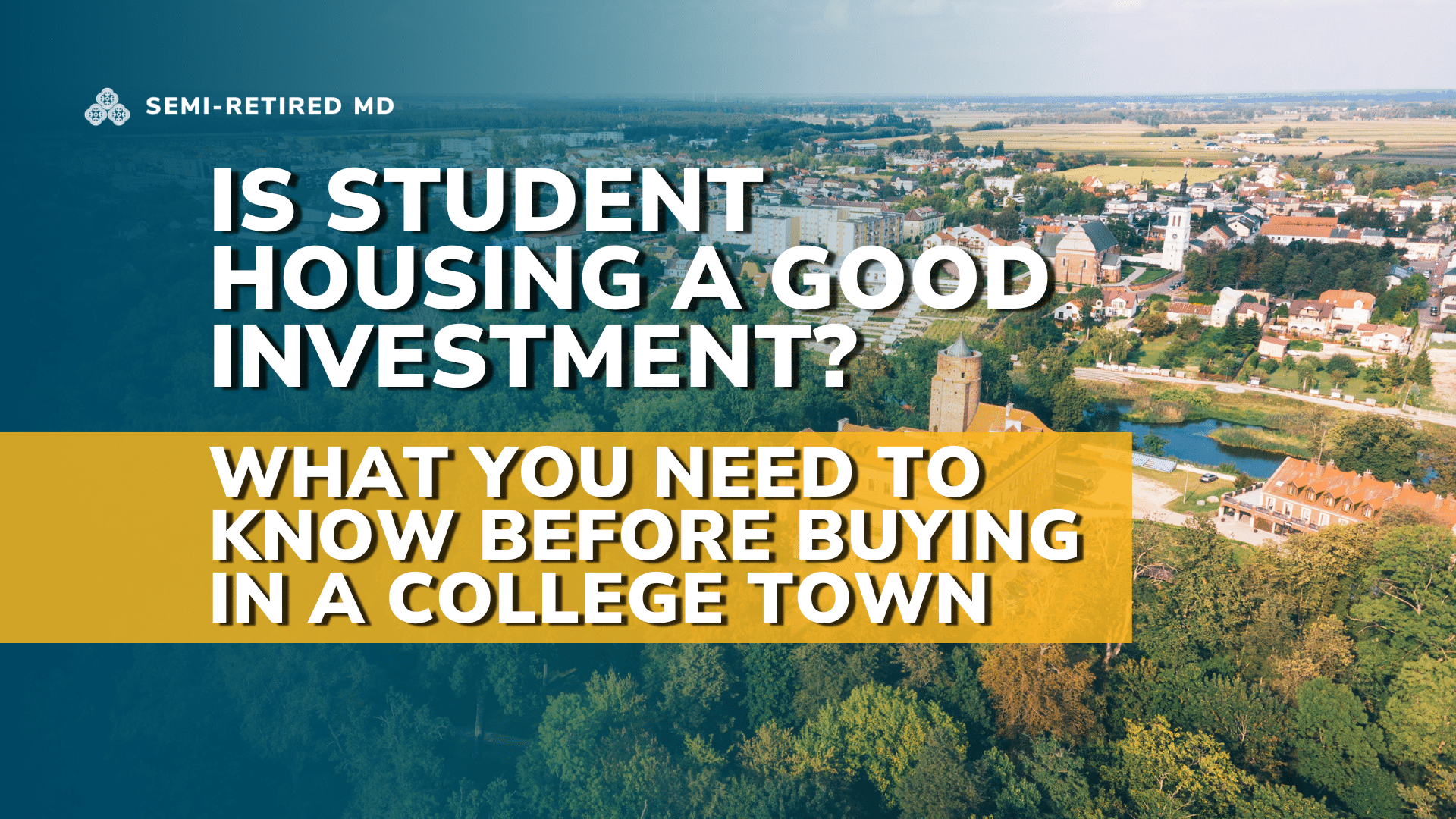
Aerial view of a college town with text overlay: “Is student housing investment a good idea? What you need to know before buying in a college town.”.

Is Student Housing a Good Investment? What You Need to Know Before Buying in a College Town

Summary: Student housing can look like an attractive real estate strategy thanks to steady demand, higher rent potential, and its familiarity to many investors—but it comes with unique risks that require a very different approach than traditional rentals. Through early experience investing in a college town, this article breaks down how student housing works, why it appeals to investors, and the common pitfalls, including strict leasing cycles, hands-on management, financing challenges, and overreliance on a single university-driven economy. The key takeaway: student housing can be profitable in the right markets—especially larger, diversified metros with strong enrollment and limited on-campus housing—but in small, one-employer college towns, the risks are often underestimated. Careful market analysis and an understanding of the academic calendar are essential before investing. [Disclaimer: We are not accountants, lawyers or financial advisors, so please consult your own team of professionals about the topics covered in this article.] When I first started investing in real estate back in 2001, one of my early deals was in Oxford, Mississippi—home to the University of Mississippi (Ole Miss). Why Oxford? It was where my close friend had gone to college. We had decided to partner on a real estate deal, and because he

Read More »
Man with glasses poses in front of a text graphic discussing a 2024 real estate market outlook by J Scott for Semi-Retired MD.

Is Real Estate Still a Good Investment? J Scott’s 2024 Market Outlook

In this episode of Doctors Building Wealth, we sit down with real estate expert J. Scott for a comprehensive look at the state of the economy and what it means for investors in today’s market. J. offers valuable insights into where the economy is headed, including his thoughts on potential recession risks, interest rate trends, and the future of single-family home values. As someone who’s syndicated over $140 million in real estate and hosts the Drunk Real Estate podcast, J. brings a wealth of knowledge, breaking down complex topics in a way that’s both accessible and actionable. Whether you’ve been investing for years or are just getting your feet wet, J. Scott shares his strategies for navigating economic uncertainty, including how to protect your portfolio and capitalize on opportunities. Curious about whether now is the time to buy, hold, or sell? Tune in to hear J.’s expert analysis and practical advice, and find out how to stay ahead in today’s volatile market. This is an episode you won’t want to miss if you’re looking to thrive as a real estate investor in the months and years to come. Tune in now for game-changing insights that could level up your real estate investing! Listen

Read More »

Free Guide for Physicians

How to Make $100K In Your First Year of Real Estate Investing

Register Your Interest & Get The Details To Your Inbox