


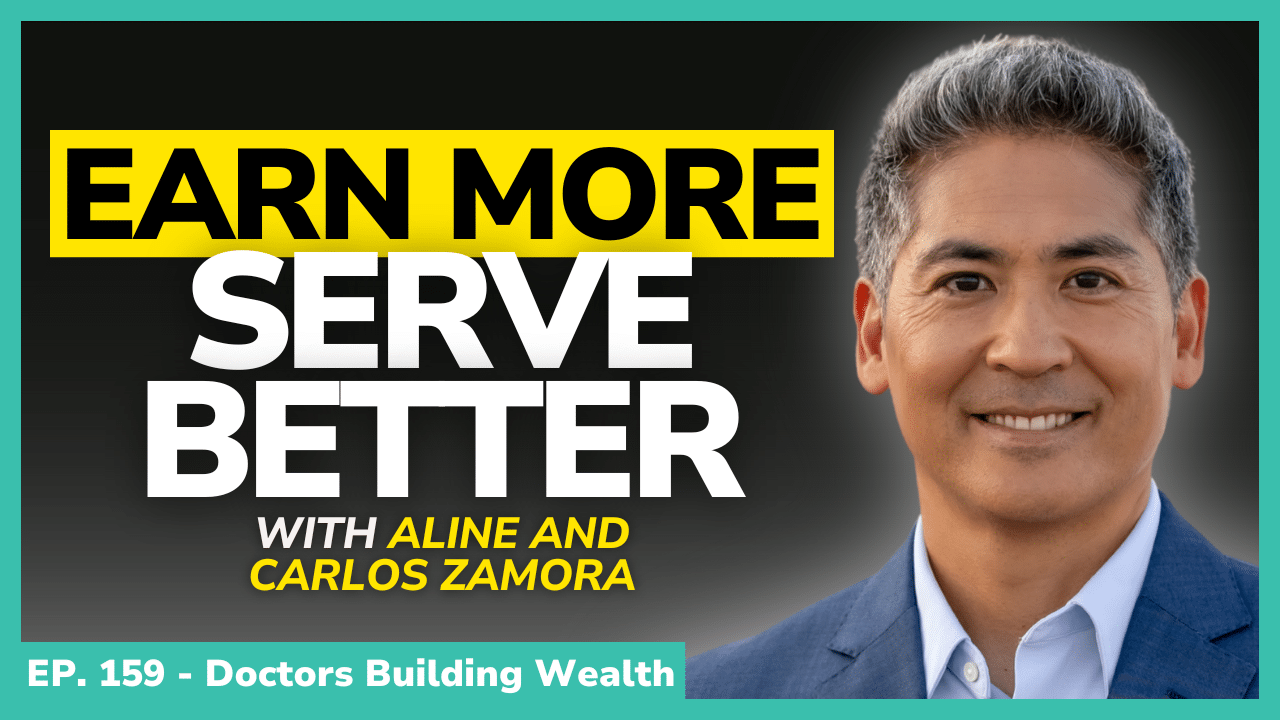
When Carlos, a cardiologist, worked through the entire COVID-19 pandemic—one of the first to return to his hospital—he never imagined he’d end up paying back a month of salary at year’s end. Despite his dedication while leadership “disappeared,” the harsh reality of being undervalued in the healthcare system became crystal clear.
This watershed moment didn’t break him. Instead, it propelled Carlos and his wife Aline into building a thriving real estate portfolio focused on assisted living facilities—a niche investment strategy that’s helping them achieve financial freedom for doctors while making a meaningful impact on their community.
Their journey from Brazilian immigrants to successful real estate investors demonstrates that real estate investing for physicians isn’t just about acquiring properties—it’s about creating a business that aligns with your values while building lasting wealth.
From Different Worlds to a Shared Vision
Carlos and Aline arrived in the United States from Brazil in the same year but didn’t meet until 2006 in Miami. Carlos was pursuing his cardiology residency and fellowship, while Aline, with her MBA background, was on a business assignment.
Their paths to real estate investing were equally diverse. Aline began as a realtor in Miami around 2014, learning the mechanics of transactions by helping others buy and sell properties. But her real “aha moment” came when she saw a parcel in downtown Miami being purchased by a Mexican group to build multifamily housing.
“I remember asking myself, what is multifamily? This guy will be living out of rentals, what is that?” she recalls. That single question sparked a curiosity that would transform their financial future.
Carlos’s interest stemmed from family experience—his parents had owned apartments in Brazil, and his father lived off rental income. When he graduated from fellowship, he knew he needed to get in the game. Their first purchase? A modest one-bedroom and two-bedroom unit in North Miami.
“It was a very basic evaluation, but thankfully it worked out. That’s kind of getting our feet wet,” Carlos explains.
The Turning Point: Moving Beyond Basic Real Estate
For several years, Carlos and Aline followed the traditional house-hacking path, buying larger properties as their family grew. But they recognized the inefficiencies and limitations of this approach.
“We were like, well, you know, this will take a long time,” Carlos admits. Their desire to grow faster and more strategically led them to discover specialized education focused on physician real estate investing in 2021, during the COVID-19 pandemic.
This education transformed their approach entirely. Before, Aline was managing properties herself, taking calls between patients, dealing with maintenance issues without proper systems, and lacking clear analytics on what actually made sense as an investment.
“I didn’t know how to do cash-on-cash return, how to exactly run an investment. It’s like having rentals look amazing, but what exactly makes sense?” she explains.
The difference between owning properties and running a profitable real estate business became crystal clear.
Why Assisted Living? A Strategic Niche with Purpose
While many physicians gravitate toward traditional single-family rentals or multifamily apartments, Carlos and Aline identified a compelling opportunity in assisted living facilities—a niche that combines healthcare expertise with real estate investing.
The advantages of assisted living investments include:
- Growing demographic demand: The aging population creates increasing need for quality senior housing
- Healthcare background advantage: Medical professionals understand resident needs, compliance requirements, and quality care standards
- Higher returns: Assisted living facilities often generate stronger cash flow than traditional residential rentals
- Meaningful impact: Providing quality care environments aligns with the mission many healthcare providers value
- Recession resilience: Senior housing needs remain consistent across economic cycles
For Carlos, the connection between his cardiology practice and assisted living was natural. “It’s practicing medicine in a different form,” he notes. “We’re still taking care of people’s needs, but building wealth simultaneously.”
Building the Right Foundation: Systems and Team
One of Aline and Carlos’s most crucial realizations was that successful real estate investing for physicians requires proper systems and team building.
Before structured education and mentorship, Aline was drowning in operational chaos—managing everything herself, hiring random subcontractors, fielding tenant calls at all hours, and trying to analyze deals between patient appointments.
Their transformation involved:
Creating Proper Systems
- Implementing standardized processes for tenant screening and onboarding
- Developing clear maintenance protocols and vendor relationships
- Establishing financial tracking systems for accurate ROI analysis
- Building documented procedures that enable delegation
Assembling the Right Team
- Professional property managers who handle day-to-day operations
- Reliable contractors with experience in senior housing
- Specialized attorneys familiar with assisted living regulations
- Accountants who understand real estate tax strategies
- Mentors and coaches who had successfully built similar portfolios
“Without a team, it was crazy. It wasn’t organized,” Aline emphasizes. “You have to put the team together.”
The Power of Partnership: Working as a Couple
One of the most valuable aspects of Carlos and Aline’s success is how they’ve learned to work together effectively as business partners while maintaining a strong marriage.
Their key insights for couples in real estate include:
Align Your Values and Mission
Don’t just talk about goals on paper—ensure you genuinely share the same vision. “It’s not idealistic, it’s real,” Carlos stresses. “When real problems come, you have to be aligned, not just on paper or because it looks good. It has to be felt within the parties involved.”
Leverage Complementary Strengths
Carlos brings medical expertise and analytical thinking, while Aline contributes business acumen and operational excellence. “You line up those interests and exponentially multiply the superpowers,” Carlos explains.
Maintain Clear Communication
Understanding each other’s working styles, stress responses, and decision-making processes prevents conflicts and strengthens collaboration. “Learn yourself and learn your partner,” Aline advises. “Focus on the positives of each one and combine them.”
Set Realistic Expectations
Real estate isn’t a get-rich-quick scheme. “Think five, ten years,” Carlos recommends. “Then chunk it down to five years, three years, one year, six months, three months, then weekly goals. Every day, make some progress.”
This patient, systematic approach has allowed them to build sustainably while avoiding the burnout that comes from unrealistic expectations.
From Limiting Beliefs to Taking Action
Like many high-achieving professionals, Carlos and Aline faced significant mental barriers when transitioning from traditional employment to real estate entrepreneurship.
Common limiting beliefs they overcame:
- “I don’t have time with my demanding medical career”
- “I don’t know enough about business and real estate”
- “What if I fail or make expensive mistakes?”
- “The market conditions aren’t right”
- “I need more money/knowledge/experience before starting”
Aline’s advice is direct and powerful: “If I did it, everybody can do it.” Despite arriving in the United States with poor English and facing language barriers, she built a successful real estate business. “Just take the first step and start it. You know, you can do it.”
Carlos emphasizes the importance of taking imperfect action: “We all wanted it within a year or six months or a month. But you have to be patient, step by step.”
The Never-Give-Up Mindset
Perhaps the most important lesson from Carlos and Aline’s journey is their commitment to persistence despite challenges.
“Never give up—that’s my life motto,” Aline declares. “There will be plenty of times like in marriage, friendship, or residency where you want to quit. Don’t give up.”
Carlos adds valuable perspective on handling setbacks: “There’s learning in that pain. Process that pain, feel it, but then process it. There will be big learning there that makes you stronger for the next challenge. Future obstacles will feel manageable because you’ll know how to deal with them.”
This resilience—familiar to anyone who’s completed medical training—translates directly to real estate investing. The ability to persist through difficult tenant situations, renovation challenges, financing obstacles, and market uncertainties separates those who build lasting wealth from those who quit at the first difficulty.
A Global Opportunity: Real Estate Investing Beyond Borders
An inspiring aspect of Carlos and Aline’s message is that real estate investing for physicians isn’t limited by geography. They’ve consulted with healthcare professionals building portfolios in Brazil, Europe, and Australia.
“The rules might be a little bit different, but what you deal with at the end of the day is universal,” Carlos explains. “Practicing medicine in Italy is the same for the most part. 80% of what you’re doing is the same. Don’t feel like ‘in my location, I cannot do it.'”
The global aging population creates universal demand for senior housing. “The whole world really is aging, so the need is there,” Carlos notes. “We should be taking care of those needs, fulfilling the mission, also being successful and increasing your personal wealth, financial wealth, and experience wealth.”
This perspective opens possibilities for physicians regardless of location, demonstrating that the principles of successful real estate investing transcend borders.
Key Takeaways: Your Roadmap to Success
Carlos and Aline’s journey offers a blueprint for any physician seeking financial freedom for doctors through strategic real estate investing:
Start with Education
Invest in learning from those who’ve successfully built what you want to create. Quality education accelerates your timeline and helps you avoid costly mistakes.
Build Your Team Systematically
You cannot scale a real estate business alone. Identify the key roles you need and intentionally build relationships with experienced professionals.
Choose a Niche That Aligns with Your Strengths
Assisted living facilities worked for Carlos and Aline because of their healthcare backgrounds. Find your own strategic advantage.
If Partnering, Align First
Whether with a spouse, friend, or colleague, invest time upfront clarifying values, expectations, and working styles. This foundation is crucial.
Take Imperfect Action
You will never have all the answers before starting. Begin with what you know, learn as you go, and adjust your approach.
Commit to the Long Game
Real wealth building takes years, not months. Set realistic timelines and make consistent progress toward well-defined goals.
Never Give Up
Challenges are inevitable. View them as learning opportunities that strengthen your abilities and prepare you for future success.
The Bottom Line: Your Future Awaits
Carlos and Aline’s story demonstrates that building a successful real estate portfolio—even in a specialized niche like assisted living—is achievable for healthcare professionals willing to educate themselves, build proper systems, and persist through challenges.
The alternative? Continuing in a system that may not value your contributions, as Carlos discovered when asked to repay salary after working through the pandemic. Or staying stuck in the traditional path while watching years pass without building meaningful wealth outside your clinical income.
The choice is yours. The time to start is now.
Related Episodes You’ll Love:
- Episode 158: Dream Bigger: From Limiting Beliefs to Six Short-Term Rentals with Dr. Lama Noureddine
- Episode 157: How to Build a High-Cashflow Real Estate Business With Sober Living Homes with Rebecca and Scott
Carlos is a cardiologist and Aline brings extensive business and real estate expertise. Together, they’ve built a thriving assisted living portfolio while raising their family and demonstrating that healthcare professionals can successfully diversify their income through strategic real estate investing. Their journey proves that with the right education, systems, and mindset, financial independence is within reach.


